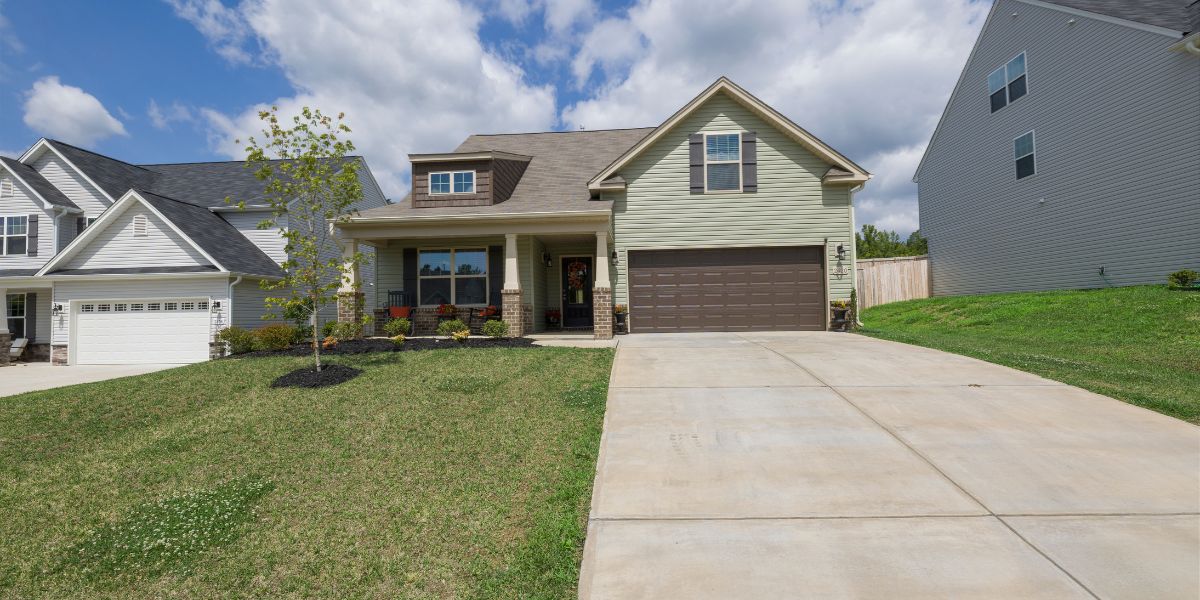
Most Common Types of Storm Damage Repairs
Most storm damage repairs fall into five groups: roofs with lifted or missing shingles and leaks, water damage, fallen trees and the structural damage they cause, siding and gutters, and broken windows, fences or deck boards. The roof usually goes first. Wind and hail cause more homeowner claims than anything else. Between 2018 and 2022, 2.8% of insured U.S. homes filed a wind or hail claim each year, almost double the 1.6% rate for water damage and freezing, according to the Insurance Information Institute.
Western Washington gets its own version of the problem. Here, the wind, the rain and the tall trees tend to show up together. When the November 2024 bomb cyclone hit, roughly 650,000 people across the region lost power, and utilities traced most of the outages to falling trees and limbs. Those same trees came down on roofs, decks and fences, which is why storm damage repair around Olympia so often starts with a chainsaw before anyone touches a shingle.
At KD Design General Contractor, we repair storm damage across Thurston, Mason, Pierce and Lewis Counties. This guide covers the repairs we see most, what each one involves, and which ones you can handle yourself.
Most Common Storm Damage Repairs
Most storm damage repairs fall into six groups: roof, water, trees and structure, siding and gutters, windows and doors, and outdoor structures. The table ranks them roughly by how quickly each one gets worse if it’s left alone.
Storm damage at a glance
| Damage type | What you’ll notice | Typical repair | How urgent |
|---|---|---|---|
| Roof damage | Shingles in the yard, bare patches, drips in the attic | Tarp, then shingle, flashing or decking repair | Same day if it’s leaking |
| Water damage | Ceiling stains, wet carpet, musty smell | Water extraction, drying, drywall and insulation replacement | Within 24 to 48 hours |
| Fallen tree / structural | Tree or large limb on the roof, cracked rafters, sagging ceiling | Tree removal, framing repair, engineer sign-off | Emergency |
| Siding and gutters | Missing panels, gutters pulled off the fascia | Panel replacement, rehang or replace gutters | Within 1 to 2 weeks |
| Windows and doors | Cracked glass, jammed frames | Board-up, then glass or unit replacement | Board up the same day |
| Fences, decks, sheds | Leaning posts, panels down, loose railings | Post reset, panel or board replacement | When the house is safe |
Storm damage? Call KD Design at (253) 678-1382 for a same-week inspection anywhere in Thurston, Mason, Pierce, or Lewis County.
Roof Repair After Storm Damage: How It Gets Done
Most roof storm damage starts small. A gust gets under the edge of a shingle, snaps the adhesive strip that holds it down, and flips the tab back. Sometimes the tab tears off and lands in the yard, and you’ll spot that. More often it just folds and lays back flat once the wind dies.
The repair depends on how far the wind got. Losing a few tabs means a patch job: matching shingles, new nails, and resealing the strips around them. When the wind peels back flashing around a chimney or vent, the flashing has to be refit, because that’s where most leaks start. If water has been getting through for a while, we open the roof and check the plywood decking for soft spots.
Local roofs have one more problem. Years of moss growth lift shingle edges and hold moisture, so a windstorm finds the weak spots quickly. A roof that was already moss-damaged can turn a small patch into a partial replacement.
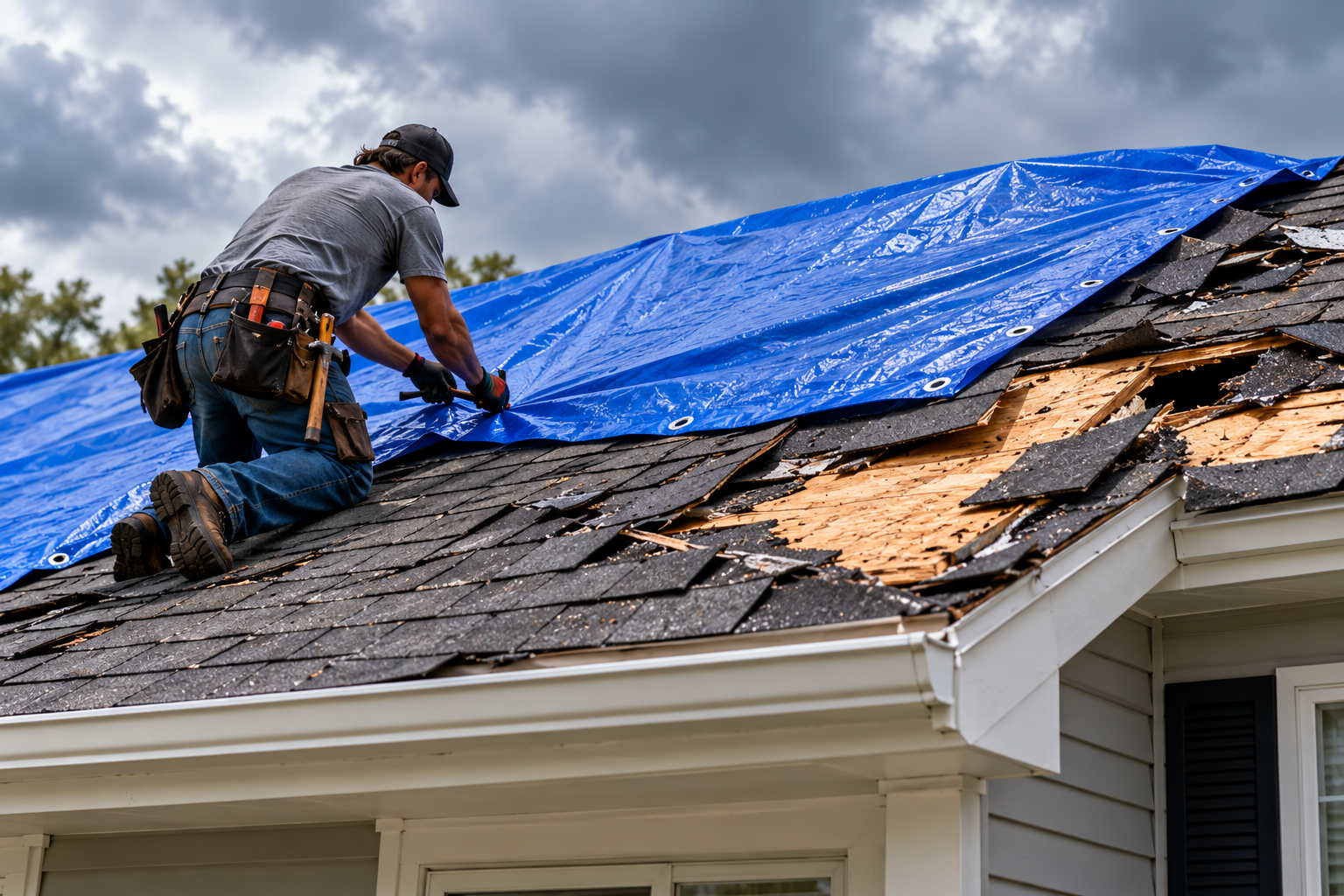
If shingles come off during the storm, a properly secured tarp is the right stopgap. For roofing and siding work, see our design and build services.
Key takeaway: A roof that looks fine from the driveway can still be taking on water. Get roof storm damage checked within a week of a big blow.
Water Damage Repair: Why It Spreads Faster
Water damage is the most rapid storm damage because wet drywall, insulation and subfloor must be dry within 24-48 hours to prevent mold growth. Then, it’s a tear-out job when it’s dry.
Infiltrations include roof, window and at-ground water from saturated soils. This is done by clearing up standing water and running fans and dehumidifiers. Then we measure moisture behind the walls, because paint can feel dry while the drywall behind it is still soaked.
Wet insulation almost always gets replaced. It’s cheap, it holds water, and it stops working once it has been soaked. Laminate and carpet pad usually go too. Solid hardwood can sometimes be saved if drying starts early.
Finished basements take the hardest hit. If you’re rebuilding one after a flood, our guide to finishing a basement for living space covers moisture control you can build in this time. Larger interior rebuilds go through our home remodeling team.
Pro tip: Before you step into standing water, turn off the breaker for that room. Then pull off the wet baseboards and open closet and cabinet doors so air can reach the wall cavities. Take photos of soaked carpet and drywall before anything goes in the dumpster.
Damage Caused When a Tree Falls On a House
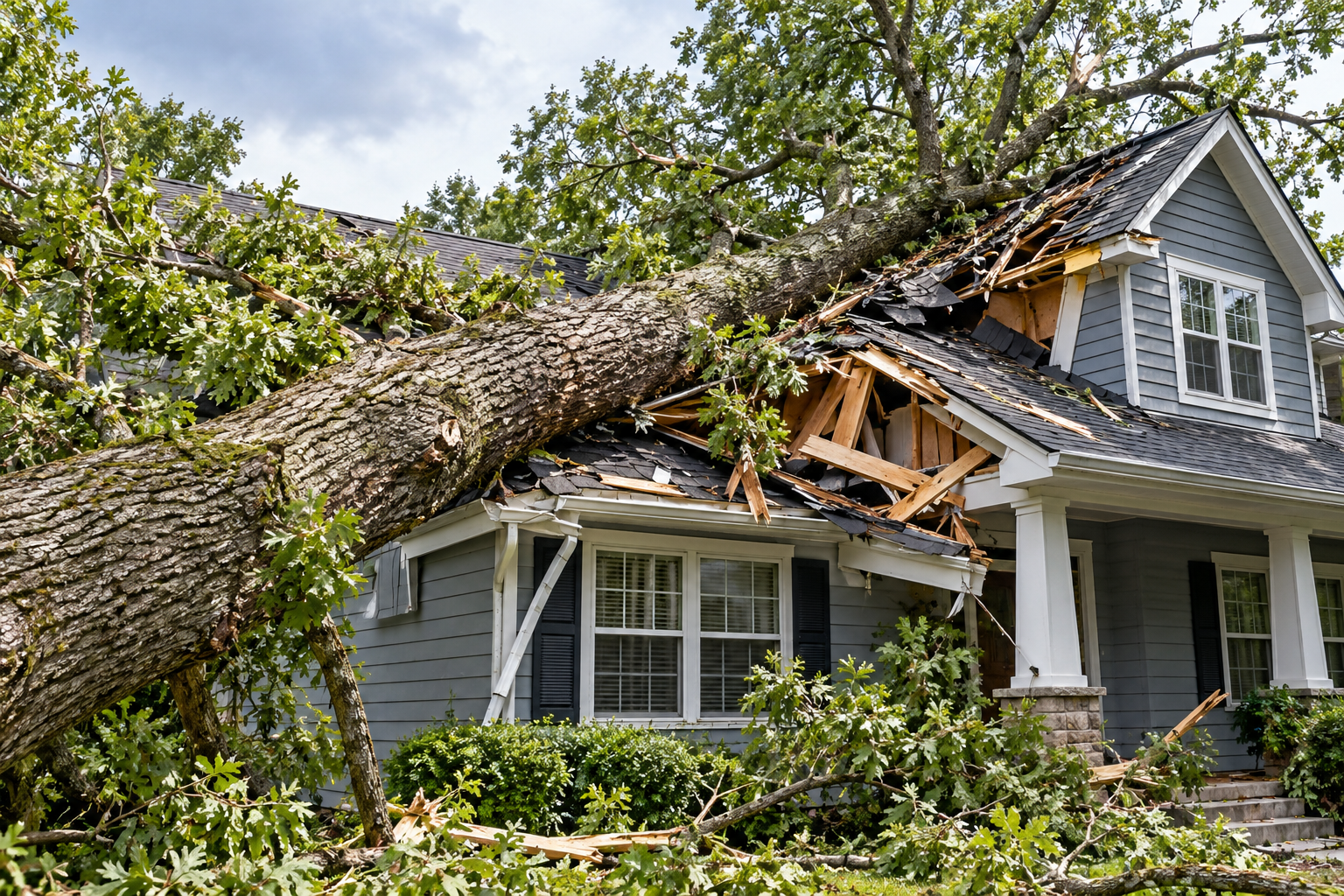
When a tree lands on a house, the shingles are the least of it. The real problem is underneath. A big fir coming down will usually crack a rafter or two, sometimes a whole truss, and it can shove a wall out of plumb. Once that happens, the roof isn’t carrying its weight the way it was built to. So the framing gets fixed first, by a crew that does structural work, and on bigger hits an engineer signs off on the repair. Only then does anyone think about shingles.
This is the signature storm repair in our area. Douglas firs and big-leaf maples grow tall. Our winter storms bring long periods of rain that soak the soil around their roots, and then the wind arrives. Utilities pointed to exactly that mix, saturated ground plus high wind, in November 2024.
The order of work matters. First the tree comes off, carefully, so a crane or rigging crew doesn’t cause more damage. Then the opening gets shored and weathered in. After that, damaged framing is sistered or replaced, sheathing goes on, and the roof, ceiling and insulation are rebuilt. Most jobs like this need a building permit.
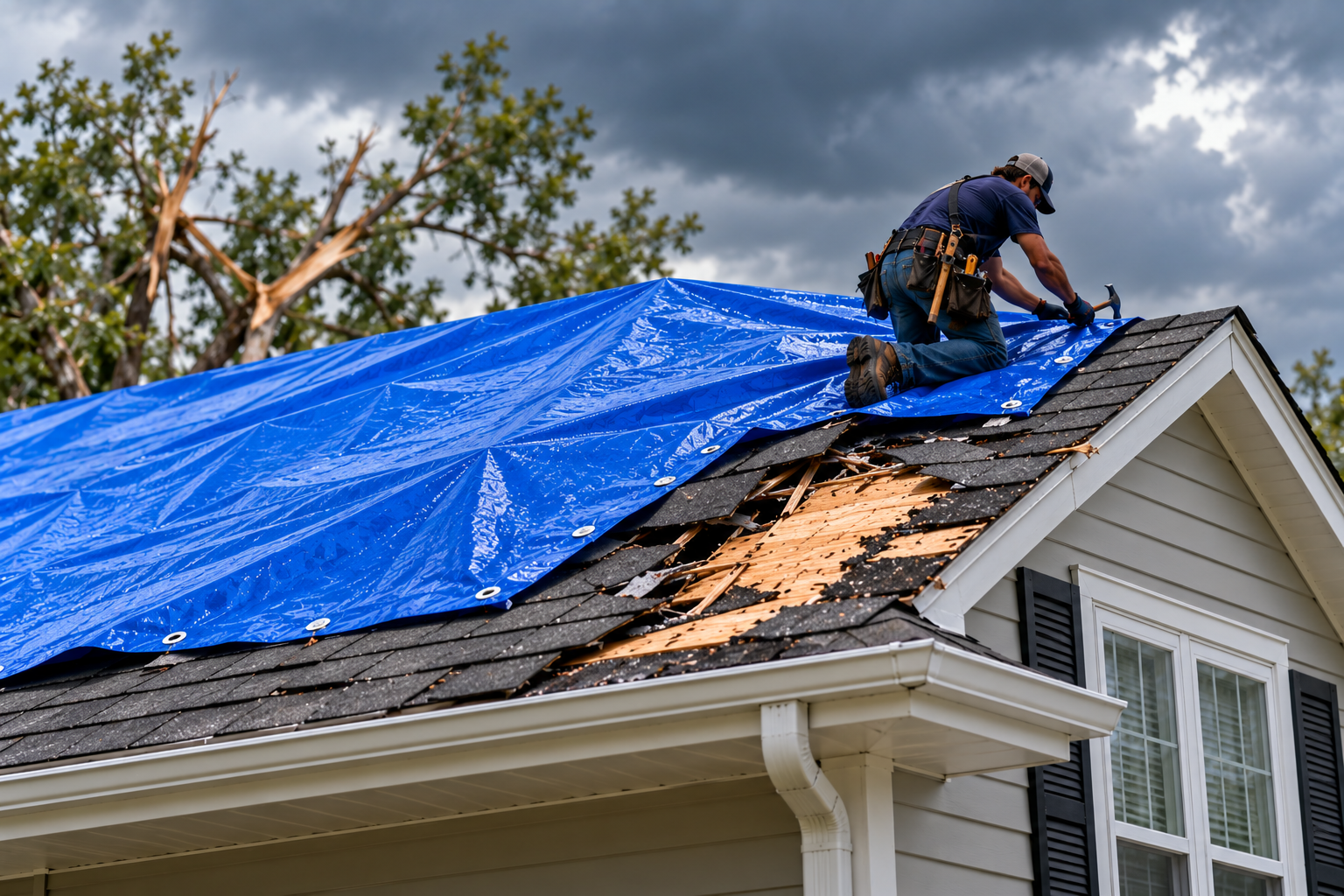
Our exterior work crew handles tree removal, demolition and foundation work, so one team can manage the whole job.
Pro tip: Don’t try to cut a tree off your own roof. Limbs pinned under that much weight can spring back hard, and a wrong cut can drop the trunk further into the house. Call your insurer early, since many policies help cover tree removal when it lands on the house.
Key takeaway: With fallen tree damage, the framing gets fixed first, and the shingles come last. If a contractor wants to start with the roofing, get a second opinion.
Which Siding, Gutter and Window Repairs Follow a Windstorm
Siding repair after a storm usually means replacing panels that blew off, cracked or came unlatched, and checking the house wrap behind them for tears. If exposed wrap sits in the rain for weeks, the storm damage becomes rot damage.
Vinyl siding doesn’t handle a hard gust well. Panels crack, or they unlatch and flap until they tear free. Fiber cement is tougher in wind, but a flying branch can still knock a chip out of a corner. Oddly, the hardest part of most siding jobs isn’t the repair itself. It’s finding a match. Colors fade and profiles get discontinued, so if there’s a box of leftover siding in your garage from the original install, don’t throw it out. It could save you from re-siding a whole wall.
Gutter damage you’ll usually see right away, as a section sagging off the fascia, a bent downspout, or streaks down the siding where water spilled over. Gutters rarely fail empty. They go when they’re packed with fir needles, full of rainwater, and a gust hits them at the worst moment. Most of the time we can rehang the original run with heavier hangers, as long as the fascia board behind it is still solid. If that wood has gone soft, it gets replaced first.
Broken windows and doors need an emergency board-up the same day, for security and to keep rain out. After that, the glass or the full unit gets replaced once it’s in stock.
Pro tip: Walk the whole house after a storm and look along the walls at an angle, not straight on. Loose siding panels sit slightly out of line and catch the light differently. Clean the gutters every October, before the first big storm, so they aren’t full of needles when the wind hits.
Key takeaway: Small siding repair and gutter damage jobs turn into rot repairs if they sit through a wet winter. Fix them within a couple of weeks.
Storm Damage to Fences, Decks and Outbuildings
Yes. Fences and decks take a lot of storm damage because wet ground loosens posts at the same moment wind loads the panels like sails. A leaning run of fence usually means one or two failed posts, not a whole new fence.
Fence repair usually involves resetting posts in fresh concrete and replacing snapped panels or boards. On decks, we check the ledger board where the deck attaches to the house. A ledger damaged by a falling limb is a safety issue, because that connection holds the whole deck up. Sheds and detached garages get the same checks as the house: roof, siding, and whether the structure has shifted.
Our fence, deck and patio services cover repairs and full rebuilds when the damage goes too deep.
Pro tip: If a limb hit your deck, keep people off it until someone checks the ledger board. Grab the railing and give it a firm shake. Any give at all means the posts or fasteners have loosened.
Key takeaway: One leaning fence section usually means one or two bad posts. Fence repair after a storm often costs less than people expect.
Are Hail, Lightning and Ice Damage a Real Risk Around Olympia?
Hail, lightning and ice cause less damage around Olympia than wind and water, but they do happen. Nationally, hail is a major claim driver. In western Washington it’s uncommon, and large, roof-damaging hail is rare. Tornado damage is rare too.
Lightning is more common near the coast, and a strike can char framing, blow out wiring and start a fire. Any lightning damage to a structure should be inspected by a licensed electrician before the power goes back on.
Ice and snow are a winter problem here, especially at higher elevations and in colder snaps. Ice dams form when heat escaping through the roof melts snow that refreezes at the eaves, pushing water under the shingles. The fix is better attic insulation and ventilation, not just a new roof. Heavy wet snow can also pull gutters down and stress older roof framing.
Pro tip: Lightning usually gets in through the wiring, so put your TV and computer on surge protectors and have an electrician add a whole-house protector for the furnace. For heavy snow, a long-handled roof rake clears the eaves from the ground, with no ladder needed.
Key takeaway: You won’t see much hail or lightning around Olympia. Ice dams are a different story, and the fix is in the attic: good insulation and airflow stop them better than a new roof would.
Storm Repairs You Can Handle Yourself
You can handle the cleanup and the paperwork yourself: picking up small branches, clearing ground-level drains, photographing everything, and replacing a single fence board. Anything on a ladder, anything structural and anything electrical should go to a pro.
Please skip the roof in a storm. Wet shingles and gusty wind cause more serious injuries than the leak would. A bucket under the drip and a call to a contractor is the right move. Stay away from downed lines and report them to your utility. If a repair costs only a little more than your deductible, it may make sense to pay for it yourself rather than file a claim, which is advice the state insurance commissioner’s office gives too.
Your first 48 hours after a storm
| Step 1 | Step 2 | Step 3 | Step 4 | Step 5 |
|---|---|---|---|---|
| Stay safe. Check for downed lines, gas smells, and sagging ceilings | Document. Photos and video of everything before you move anything | Stop the water. Tarp, board up, shut off water if a pipe broke | Call your insurer. Ask what’s covered before you formally file | Get a local contractor. Written estimate, registered in WA |
How to Choose a Contractor After a Storm
Choose a registered local contractor who gives you a written estimate and doesn’t push you to sign anything that hands over control of your insurance claim. After big storms, out-of-area “storm chasers” knock on doors, collect deposits, and leave.
You can verify any contractor’s registration through Washington L&I before you hire them. You also have the right to choose your own contractor, even if your insurer suggests a preferred one. Be careful with an “assignment of benefits” form. Signing one can let a contractor settle your claim directly with the insurer without your approval.
Our post on why you should hire a licensed general contractor in Olympia covers what to check. How to work with a contractor from design to finish explains what a good project process looks like.
Frequently asked questions
What are the different types of repairs?
The main types of storm damage repairs are roof repairs, water damage mitigation and drywall replacement, structural framing repairs, siding and gutter repairs, window and door replacement, and fence, deck and outbuilding repairs. Emergency work like tarping and board-ups comes first, and permanent repairs follow.
What are the common types of roof repairs?
Common roof repairs include replacing missing or creased shingles, resealing lifted tabs, refitting flashing around chimneys and vents, replacing ridge caps, and swapping out water-damaged decking. After a tree strike, rafter or truss repair comes before any roofing work.
How long does it take to repair storm damage?
Emergency tarping takes hours, while a structural rebuild can take several weeks. Typical ranges once permits and materials are lined up:
| Repair | Typical time on site |
|---|---|
| Roof tarp or board-up | Same day to 48 hours |
| Shingle and flashing patch | 1 day |
| Full roof replacement | 2 to 5 days |
| Water extraction and drying | 3 to 5 days |
| Siding or gutter section | 1 to 3 days |
| Fence repair | 1 to 3 days |
| Deck rebuild | 1 to 2 weeks |
| Tree-on-house structural repair | 2 to 8 weeks, including permits |
What types of damage are typical after severe weather?
The typical damage after severe weather is wind damage to roofs and siding, water intrusion, fallen trees and limbs, broken windows, gutter damage, and downed fences. Across the U.S., wind and hail lead homeowner claims. In western Washington, wind, rain and falling trees cause most of it.
What are the five categories of storms?
The five categories come from the Saffir-Simpson scale, which rates hurricanes by sustained wind speed:
| Category | Sustained winds | Typical damage |
|---|---|---|
| 1 | 74 to 95 mph | Shingle, gutter and siding damage |
| 2 | 96 to 110 mph | Major roof and siding damage, many trees down |
| 3 | 111 to 129 mph | Roof decking and gable ends torn off |
| 4 | 130 to 156 mph | Roof structure and some exterior walls lost |
| 5 | 157 mph or higher | Many homes destroyed |
Washington doesn’t get hurricanes, but strong Pacific windstorms can produce Category 1-level gusts along the coast and ridgelines.
How long after storm damage can I claim?
Report storm damage to your insurer as soon as you can, ideally within days. Most policies require “prompt” notice, and many set a deadline, often one year, for legal action on a disputed claim, so check the “Duties After Loss” section of your policy. Once you file in Washington, your insurer has 30 days to inspect the damage, according to the Office of the Insurance Commissioner. Standard homeowners policies don’t cover river or surface flooding, which needs separate flood insurance.
Get your home back to normal with KD Design
Storm damage gets more expensive the longer it waits. KD Design inspects, documents and repairs storm damage across Olympia, Lacey, Tumwater, Yelm and the rest of Thurston County, plus Mason, Pierce and Lewis Counties. We handle everything from the first tarp to the final coat of paint, and we’ll put a written estimate in your hands that your insurer can work with.
Call (253) 678-1382 or request your free estimate today.
continue reading
Related Posts
Storm Damage Restoration: Fast Help & Repair Guide Storm damage

How to Improve Home Flow Through Better Design An aesthetically